Thailand-Cambodia Border Real Estate in Wartime: Risk Zone or Investment Opportunity?
Thailand-Cambodia Border Real Estate in Wartime: Risk Zone or Investment Opportunity?

Introduction
The property market is often a reflection of a nation’s socio-political and economic health. When conflict arises, especially in border areas, real estate prices, demand, and investment sentiment tend to fluctuate drastically. The Thailand-Cambodia border region, long a center of historical disputes and current geopolitical interests, is now witnessing renewed attention as tensions escalate. But with this uncertainty comes a crucial question: Is this region a risk zone or a hidden investment opportunity?
This article explores the current property landscape along the Thailand-Cambodia border amid wartime tensions, analyzing the effects of conflict on pricing, migration, foreign investment, and infrastructure development.
Historical Background of Thailand-Cambodia Border Tensions
Border disputes between Thailand and Cambodia are not new. The most notable conflict revolves around the Preah Vihear Temple, which has been a point of contention since the 1960s. Clashes have flared up periodically, including military skirmishes in 2008-2011, leading to the displacement of locals and temporary real estate downturns.
In recent times, while no large-scale war has broken out, localized conflicts, political instability in the region, and neighboring conflicts (like the Myanmar crisis) are contributing to a fragile peace.
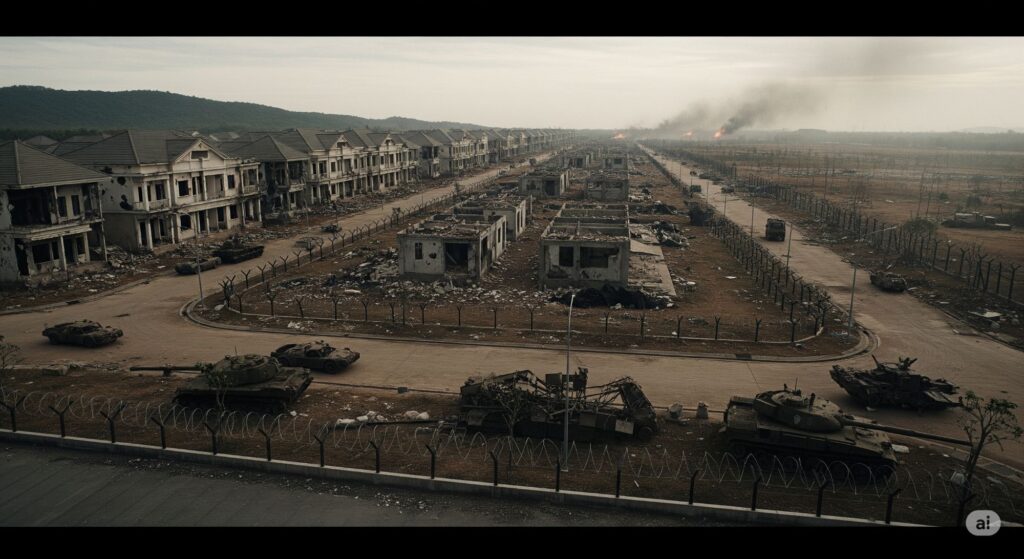
Current Geopolitical Climate and Its Impact on Real Estate
- Rising Military Presence and Civilian Concerns Increased military activity in border towns like Aranyaprathet (Thailand) and Poipet (Cambodia) has raised both security concerns and infrastructural improvements. Military roads and communication lines often precede urban development, making some zones paradoxically more attractive for long-term investment.
- Real Estate Price Volatility Property prices in border areas tend to dip during initial conflict phases due to fear and uncertainty. However, once conflicts de-escalate or borders reopen, prices typically rebound, offering high return potential to risk-tolerant investors.
Thailand Side: Real Estate Status in Border Towns
Aranyaprathet, Sa Kaeo Province This town has become a commercial hotspot due to its proximity to Cambodia. The Rong Kluea Market has long been a trade hub, and developments like special economic zones (SEZs) have attracted industrial and logistics players.
Residential Property: Prices have remained stable despite recent unrest. There is demand from workers and traders. Commercial Property: Warehousing and retail spaces near checkpoints see periodic booms. Risks: Rapid militarization and refugee influxes can impact investor confidence.
Cambodia Side: Booming Potential Amid Challenges
Poipet and Banteay Meanchey Poipet is one of Cambodia’s fastest-growing border towns, thanks to its casinos, manufacturing zones, and increasing Chinese and Thai investments.
Residential Trends: Demand for rental housing has grown, particularly for casino and factory workers. Foreign Investment: Cambodian property law allows foreigners to buy condominiums but not land, which creates leasing complexities. Risks: Political instability, corruption, and weak legal enforcement.
Special Economic Zones (SEZs): A Catalyst for Development
Both countries have launched SEZs near their borders to enhance trade and investment. These zones have led to a surge in demand for industrial land and residential spaces for workers.
Thailand SEZs: Focus on logistics, agro-processing, and light manufacturing. Cambodia SEZs: More open to foreign investors, offering tax breaks and looser regulations.
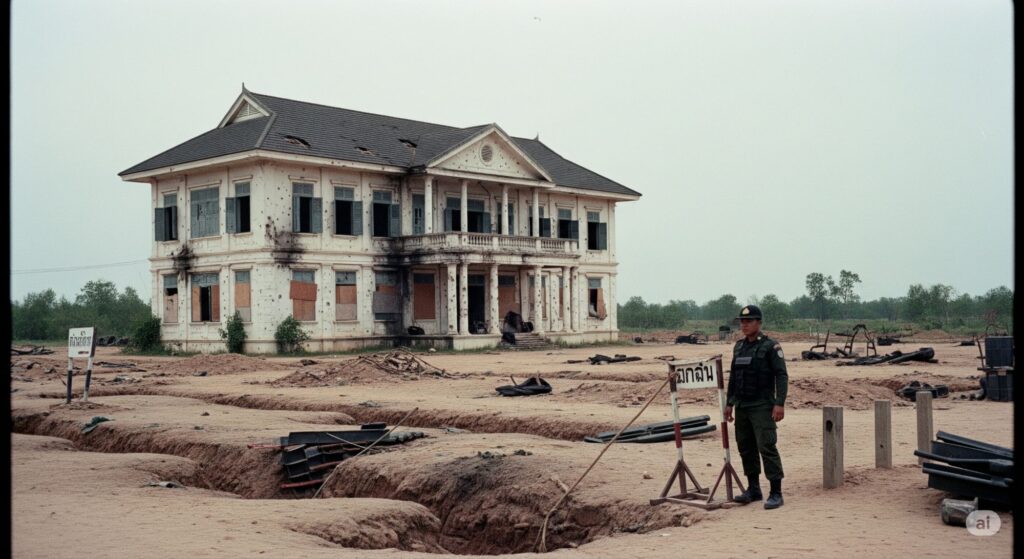
Wartime disruptions can delay these projects but rarely cause permanent abandonment, making them speculative yet potentially rewarding investments.
Refugee Movement and Its Effect on Local Property
Conflicts create displacement. When people flee border skirmishes, they often move to nearby towns, causing short-term spikes in rental demand and long-term urban sprawl.
Thailand: Hosts thousands of refugees, especially from Cambodia and Myanmar. Property Impact: Increases demand for low-cost housing and rental units.
This migration also opens avenues for affordable housing projects, mobile clinics, schools, and temporary shelters, which NGOs and developers are exploring.
Construction Slowdowns and Logistic Disruptions
Wars or localized conflicts often hinder construction timelines. Supply chains are affected, especially if construction materials or labor cross borders.
Thailand: More resilient due to stronger domestic infrastructure. Cambodia: Faces labor shortages and dependency on Thai imports.
Developers must account for delays, cost overruns, and permit hurdles during times of geopolitical instability.
Investment Outlook: Who’s Buying and Who’s Selling?
Foreign Investors: Chinese: Major investors in Cambodia, especially in Sihanoukville and Poipet. Japanese and Korean: Interested in industrial parks on both sides. Western Investors: Cautiously optimistic but prefer Thailand due to legal stability.
Local Investors: Prefer Thailand’s regulatory environment. Cambodian elite continue to invest heavily in Phnom Penh and border casinos.
Property Types Most Affected During Wartime
Residential: Medium risk, high potential (post-conflict recovery) Commercial: High risk, moderate potential (esp. retail/logistics) Industrial: Low to medium risk, high potential (SEZ-focused) Agricultural Land: High risk, high potential (speculative but cheap)
Urban Centers vs. Border Towns
As conflict spreads or rumors rise, investors shift away from borders toward major cities: Phnom Penh: Viewed as a safer, growing market. Chiang Mai & Bangkok: See capital inflow during border instability.
But this creates a contrarian opportunity—investing in border towns when others flee can yield high returns if peace is restored.
Government Policies and Bilateral Agreements
Peace treaties, border demarcations, and trade agreements all influence property trends. Recent efforts to normalize ties have included: Joint border patrols Cross-border infrastructure projects Tourism zone proposals
If successful, these moves could stabilize markets and boost investor confidence.
Practical Advice for Investors
- Do Due Diligence: Check title deeds, ownership laws (especially in Cambodia), and ongoing legal disputes.
- Monitor Political Developments: A single incident can sway property prices.
- Avoid Short-Term Flipping: Wartime real estate rewards long-term vision.
- Look for Government-Backed Projects: SEZs and smart cities are safer bets.
- Consult Local Experts: Engage legal and real estate professionals familiar with both countries.
Conclusion: Risk vs. Reward in Wartime Property
The Thailand-Cambodia border region sits at a crossroads of opportunity and volatility. While wartime conditions pose clear risks, they also unveil hidden potentials for investors who can navigate political uncertainties, legal frameworks, and economic shifts.
Whether it’s a boomtown like Poipet, a logistics corridor like Aranyaprathet, or a government-led SEZ project, real estate in this zone is a calculated gamble. For bold investors and developers, the key is preparation, timing, and a deep understanding of local dynamics.
In wartime conditions, real estate isn’t just a financial asset—it’s a geopolitical bet. Choose wisely.
For further insights, regional investment reports, or consultations on border property investments, feel free to reach out to our research desk.
Discover more from Dream Property 99
Subscribe to get the latest posts sent to your email.